
Clear Vegetation Without Disturbing Soil Structure
Forestry Mulching in Crawfordville for properties needing vegetation control, trail access, and wildfire fuel reduction
Properties with thick underbrush, saplings, and overgrown vegetation lose access and increase wildfire risk as dry material accumulates each season. Luper's Land Management handles forestry mulching in Crawfordville, converting unwanted brush and small trees into ground mulch that decomposes naturally while clearing paths, improving sight lines, and opening land for recreational or agricultural use. This method leaves root systems intact below ground, reducing erosion and preserving soil structure compared to traditional clearing that strips vegetation and exposes bare dirt.
Forestry mulching uses a drum-style cutting head that grinds vegetation into mulch as it advances across the property. Brush, small trees up to six inches in diameter, and dense undergrowth are processed in place without the need for hauling debris off-site. The mulch layer covers the ground immediately, suppressing weed regrowth and protecting soil from heavy rain common during summer months in Wakulla County.
Request a site evaluation to determine whether forestry mulching suits your property's vegetation type and clearing goals.
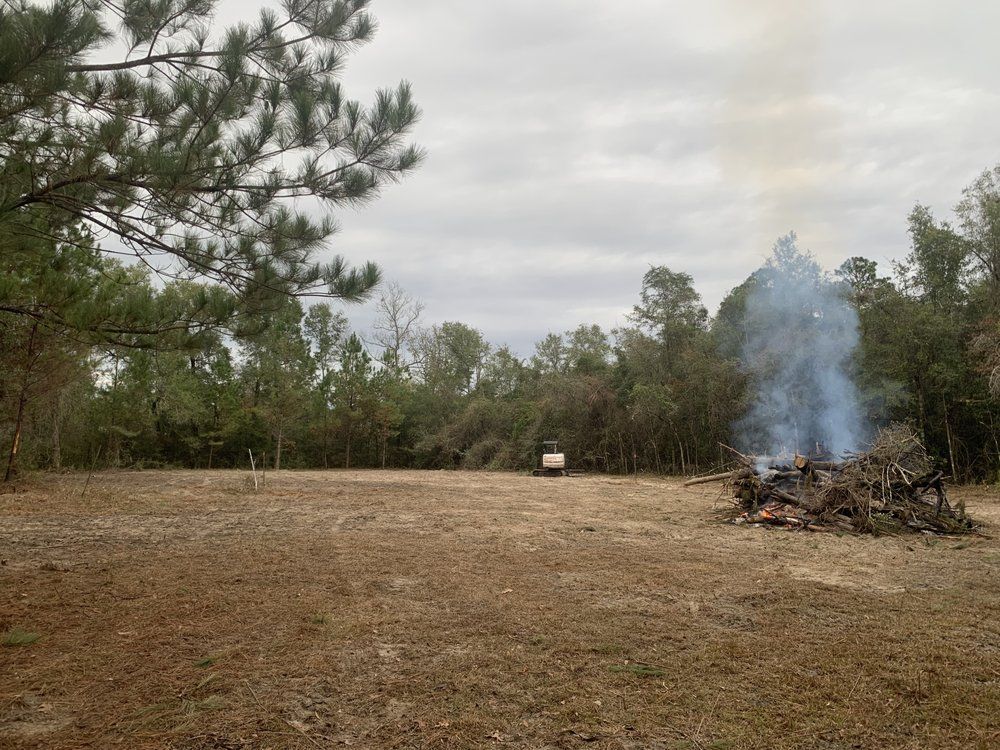
How Forestry Mulching Addresses Overgrowth
Mulching begins with marking trees or vegetation to preserve, then the cutting head processes everything else into uniform chips that settle into a protective ground layer. Properties used for hunting, recreation, or livestock benefit from selective clearing that opens sight lines without removing all cover, and the mulch layer reduces dust, slows erosion on slopes, and moderates soil temperature. Residential properties gain cleared trails, improved access for maintenance equipment, and reduced wildfire fuel load without the soil disturbance caused by bulldozing or grubbing.
Once mulching finishes, you notice clear pathways or open areas with a consistent layer of organic material covering the ground instead of exposed dirt or piled debris. Vegetation no longer blocks vehicle access, views, or sunlight, and the mulch layer prevents immediate regrowth of fast-spreading invasive species. Properties maintain better drainage because soil structure remains undisturbed and water infiltrates through the mulch rather than running off compacted surfaces.
Forestry mulching works best for properties where preserving soil integrity matters, such as slopes prone to erosion, wetland edges, or areas adjacent to water features. It does not remove stumps or large trees, so properties requiring complete clearing for construction need additional equipment and methods beyond what mulching provides.
Answers to Frequent Service Questions
Owners of larger properties or rural acreage often ask about the difference between mulching and traditional clearing before deciding on a method.
What size vegetation can forestry mulching handle?
Mulching processes brush, saplings, and trees up to six inches in diameter, converting them into ground mulch without hauling material off-site or disturbing underlying soil.
Why does mulching reduce wildfire risk?
Mulching removes dry brush and ladder fuels that carry fire from the ground into tree canopies, lowering ignition risk and slowing fire spread across your property.
How does mulching improve property access in Crawfordville?
By clearing dense undergrowth and small trees, mulching opens trails and access routes for vehicles, equipment, or recreational use while leaving a stable surface that doesn't rut during wet conditions common in this area.
What happens to the mulch after clearing?
The mulch remains on-site as a protective ground cover that suppresses weeds, reduces erosion, and decomposes gradually to improve soil organic content over time.
When is mulching better than grading or bulldozing?
Mulching is better when you want to preserve soil structure, reduce erosion on slopes, maintain natural drainage, or selectively clear vegetation without removing all ground cover.
Luper's Land Management uses forestry mulching on residential, agricultural, recreational, and hunting properties where vegetation control improves access and reduces fire risk without disturbing soil. Arrange a property visit to review your clearing needs and discuss mulching suitability for your acreage.