
Stop Water Damage Before Foundations Crack
Drainage Systems & Culvert Installation in Crawfordville for properties with standing water, erosion, and runoff pooling
Standing water around foundations, driveways that wash out after storms, and low spots that never dry signal drainage failures that worsen with each rain event. Luper's Land Management installs drainage systems and culverts in Crawfordville where water mismanagement erodes soil, undermines structures, and floods landscapes. Proper drainage redirects runoff away from buildings, prevents soil saturation that kills plants, and eliminates pooling that attracts mosquitoes and damages pavement.
Drainage work begins with evaluating natural water flow across your property during and after rain to identify where water collects, which direction it moves, and what barriers prevent it from reaching appropriate discharge points. French drains intercept subsurface water before it saturates foundation zones, culverts allow water to pass under driveways or roads without eroding travel surfaces, and grading adjustments redirect surface runoff toward ditches or retention areas. Each property requires different solutions depending on soil type, slope, water volume, and existing infrastructure.
Schedule a free drainage assessment to identify problem areas and review solutions suited to your property's water flow patterns.
What Changes After Drainage Systems Install
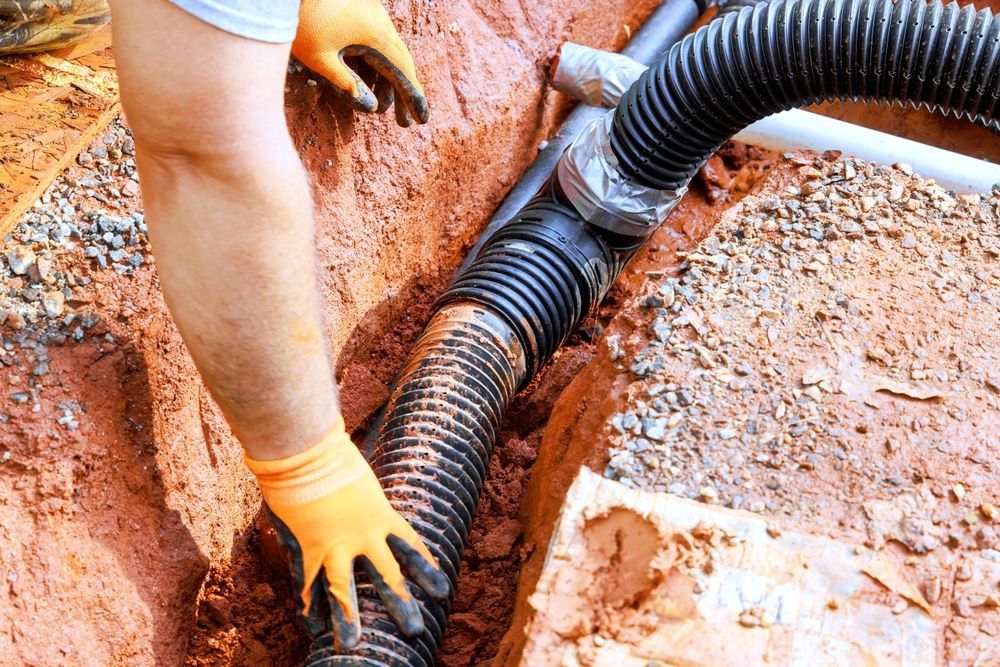
Installation involves excavating trenches for drain lines, placing perforated pipe wrapped in filter fabric to prevent sediment clogging, and backfilling with graded stone that allows water entry while supporting surface loads. Culverts require bedding stone, proper slope to maintain flow velocity, and headwalls or endwalls to prevent soil erosion at inlet and outlet points. Grading work reshapes surfaces to direct water toward collection points instead of allowing it to pond in low areas or flow toward structures.
After installation, you notice water no longer pools in problem areas during or after rain, driveways remain intact without washouts or ruts, and soil around foundations stays dry instead of saturated. Drainage systems move water quickly enough that mosquitoes cannot breed in standing water, and landscapes drain within hours rather than remaining soggy for days. Culverts allow water to pass under driveways without overtopping or eroding the road surface, and properly graded surfaces shed water before it infiltrates and weakens subgrades.
Drainage solutions address specific problems rather than applying universal designs—properties with high water tables need different systems than those with surface runoff issues, and sandy soils in Crawfordville drain faster than clay-heavy soils but require deeper excavation to reach stable bedding layers. Systems must discharge to appropriate areas such as swales, retention ponds, or natural drainage corridors rather than onto neighboring properties or roadways.
What Property Owners Usually Ask
Owners dealing with recurring water problems often ask about how drainage systems work and what changes they will see after installation.
What causes water to pool around foundations?
Water pools when soil grading directs runoff toward structures instead of away, when compacted soil prevents infiltration, or when natural drainage paths are blocked by landscaping, driveways, or fill dirt.
How does a French drain prevent foundation water damage?
French drains intercept subsurface water moving through soil toward foundations and redirect it through perforated pipe to discharge points, keeping the area around structures dry and preventing hydrostatic pressure against walls.
Why do culverts fail or wash out?
Culverts fail when undersized for water volume, installed without proper slope, or placed in unstable bedding that shifts during flow events, causing misalignment and erosion around the pipe.
What size culvert does a driveway need in Crawfordville?
Culvert sizing depends on upstream drainage area, rainfall intensity, and water velocity, with properties in Wakulla County often requiring larger diameter pipes than expected due to heavy seasonal storms and flat terrain that slows natural drainage.
When should drainage work happen relative to landscaping or construction?
Drainage installation should finish before final grading, landscaping, or paving so water management infrastructure is in place and surfaces can be shaped to direct flow toward collection points.
Luper's Land Management evaluates each property's natural drainage before recommending French drains, culverts, grading adjustments, or combined solutions that address standing water and erosion. Contact us to arrange a free drainage assessment and review options for protecting your structures and landscape from water damage.